

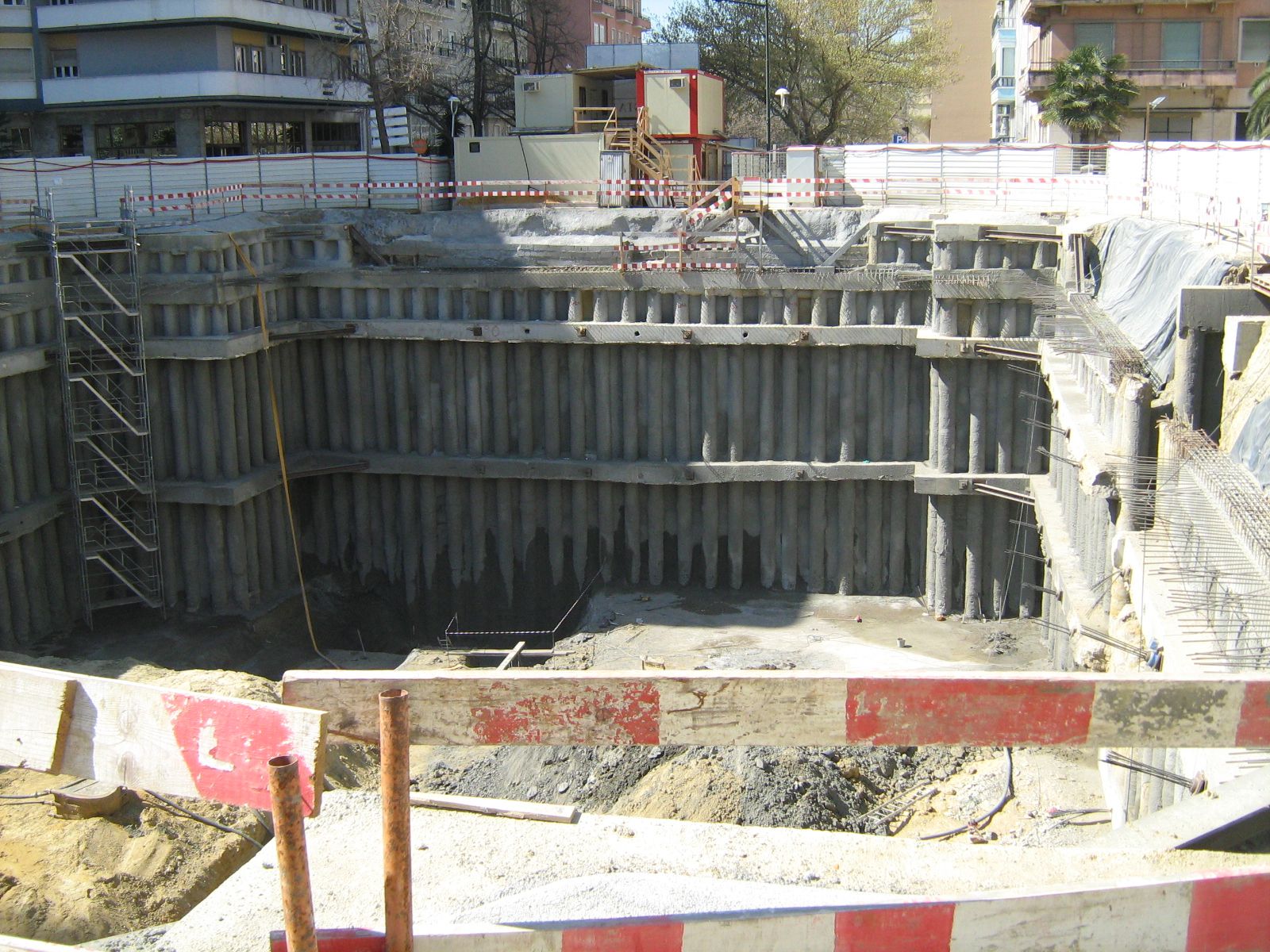
On a typical flat suburban site, a retaining wall crew sets up, runs a mini-excavator to the work face, unloads a truck of materials onto the site, and gets to work. In the Blue Mountains, this scenario is the exception rather than the rule. Steep lots, narrow access paths, ridge-line positions, terraced gardens, stairs-only rear yards and sandstone ledge formations make site access one of the most site-specific, and cost-sensitive, variables in any Blue Mountains retaining wall project.
Understanding how contractors manage access, what techniques they use, and what the options cost helps you understand your quotes and plan your project realistically.
Quick answer (BLUF)
Blue Mountains retaining wall access falls into four categories: open machine access (uncommon), restricted machine access with crane delivery, manual carry and hand tools, and working from scaffolding or elevated platforms on cliff-adjacent sites. Each step away from open access adds $800 to $4,000 or more to project costs. Always confirm the access method in your quote, it is often the biggest differentiator between competing prices.
The access problem in the Blue Mountains
Many Blue Mountains residential lots were developed before heavy earthmoving equipment existed. Lots were carved out of the sandstone escarpment terrain with hand tools; paths and steps replaced driveways; rear gardens were reached by foot. Even on lots with driveways, the driveway may terminate well above or below the work area, requiring materials to be moved vertically or across difficult terrain.
Ridge-line lots in Blackheath, Mount Victoria and Katoomba often have no vehicle access to the rear at all. Lots on the valley side of streets face a sheer drop below the building line, making work on any downslope retaining wall a rope-access or crane operation.
Access type 1: Open machine access
The gold standard, a mini-excavator can drive directly to the work face. This is possible on newer developments with formed access tracks, on lots where the retaining work is close to the street, or on larger rural properties. When open machine access is possible, Blue Mountains costs approach the lower end of the NSW range.
Realistic for: some Springwood, Blaxland and Glenbrook lots; newer estates in Lawson and Hazelbrook; rural-residential lots with formed tracks.
Access type 2: Crane delivery, restricted machine access
Where a crane or telescoping lift can reach from the street or neighbouring access, materials can be craned in and a small machine (compact excavator or bobcat) can be walked in via steps or a narrow path. The crane delivers heavy materials, concrete sleepers, steel posts, aggregate, and the machine handles excavation within the confined work area.
Crane hire costs $800 to $2,500 per day depending on machine size and reach. For a job requiring one crane day, this adds meaningfully to the project but is often faster and cheaper than purely manual access.
Realistic for: lots with reasonable clearance from the street, no overhead power lines, and a crane-accessible delivery zone.
Access type 3: Manual carry
When machines cannot reach the work area and crane access is not practical, materials are moved by hand, or in wheelbarrows. This means every concrete sleeper (typically 80-160kg), every bag of cement, every bucket of aggregate is physically carried from a drop point to the work face. On a steep slope with stairs, labour time for material movement can equal or exceed the installation labour.
Manual carry is the access method of last resort, it is slow, physically demanding and expensive. For a 20-metre retaining wall on a manually-accessed site, add $2,000 to $5,000 to the installed cost compared to an open-access site. This cost is genuine and unavoidable; it is not negotiable.
Manual carry access is common in the rear yards of Katoomba, Blackheath and Leura properties, particularly on lots that back onto the escarpment or onto steep valley sides.
Access type 4: Rope access and elevated work platforms
For retaining walls on vertical or near-vertical escarpment faces, uncommon but not unheard of in the Blue Mountains, rope access techniques or elevated work platforms (EWPs) are required. This is specialist construction and requires workers trained in height safety, appropriate equipment, and a detailed safety plan. Costs for rope-access retaining wall work are substantially higher than conventional methods.
What’s included in an access-cost quote?
When reviewing quotes for Blue Mountains retaining wall work, confirm:
- How will materials be delivered to the work face? (crane, manual carry, excavator)
- Is crane hire included in the price or separate? Crane hire is sometimes quoted separately from the wall installation.
- Who is responsible for clearing an access path? If existing landscaping needs to be moved or removed to allow access, this may be the homeowner’s responsibility.
- How will excavated spoil be removed? Getting material out of a confined site is as expensive as getting materials in.
- Is there an allowance for overhead power line clearances? If a crane is required near power lines, a power company may need to temporarily sleeve or disconnect lines, a cost and delay that can be significant.
Reducing access costs: practical options
- Stage works to coincide with other construction: If a deck, shed or major landscaping project is planned, coordinate to have a single crane day or access provision serve multiple trades.
- Lightweight materials where possible: Gabion baskets, some block systems and lighter sleeper formats reduce the load per unit and can make manual carry more practical.
- Consider helicopter access for extreme situations: For truly inaccessible sites, a helicopter can deliver material that no crane can reach. This is rare but occasionally the most cost-effective option for remote ridge-line sites.
- Accept smaller equipment constraints: A smaller finished wall installed within access limitations may be better than a large wall that is logistically impractical.
FAQs
Will a contractor visit my site before quoting?
Yes, and they should. No reputable Blue Mountains retaining wall contractor should quote a difficult-access site without visiting it first. The access assessment is as important as the structural assessment in determining a fair price.
My site needs a crane, do I need council approval for the crane?
Most standard crane operations on private property do not require a separate council approval, but if the crane needs to operate over a public road or footpath, a road occupation permit from council or Roads and Maritime Services is required. Your contractor should manage this.
Can I reduce access costs by clearing the path myself?
Yes. Removing established garden beds, steps or obstacles that would otherwise delay material movement can reduce your quoted cost. Discuss this with your contractor before work starts.
Does insurance cover workers on steep sites?
Reputable contractors carry public liability insurance and workers’ compensation regardless of site difficulty. Confirm this before work starts. Never use a contractor who is uninsured, if a worker is injured on your property, liability can extend to you as the property owner.